1925
3rd Chesham Bois registered
A Scout Troop known as 3rd Chesham Bois was registered with The Scout Association on 27 May 1925, with five Scouts and one leader.
The registration recorded the headquarters as Meadow School, Chesham Bois.
Since 1925
From the first recorded Scout troop in 1925 to today’s thriving Scout Group, discover how Scouting evolved in Chalfont St Giles over more than a century.
Our story
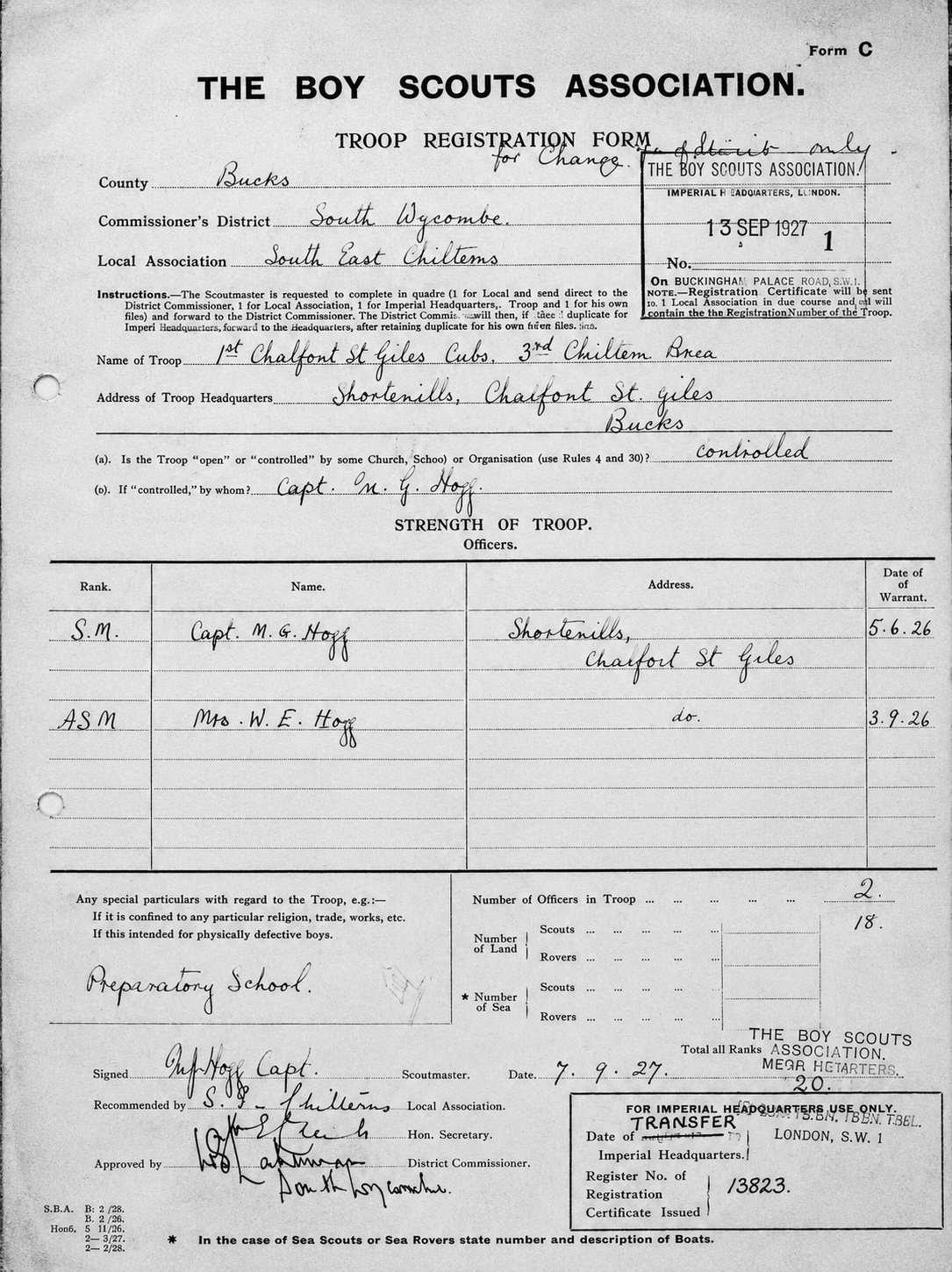
Scouting in Chalfont St Giles can be traced back to 27 May 1925, when a troop known as 3rd Chesham Bois was registered with The Scout Association with five Scouts and one leader. In September 1927, the troop was re-registered as 1st Chalfont St Giles, late 3rd Chesham Bois, with its headquarters at Shortenills Preparatory School.
Around the same time, a separate village troop, 2nd Chalfont St Giles, emerged. Contemporary newspaper reports from 1928 onwards record its camps, Scout Hut, Rover Crew, community events and growing role in village life. Although no separate registration records for this troop have so far been found in the Scout Heritage archives, its existence is well documented in contemporary newspapers and Scout Association reports.
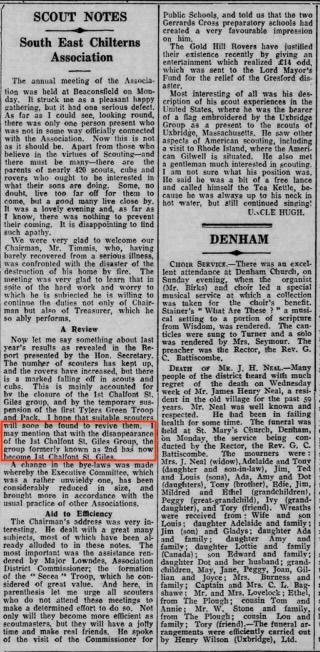
The South-East Chilterns Scout Association Annual Report for 1934 records that the original 1st Chalfont St Giles Group had closed and that “the group known as 2nd has now become 1st Chalfont St Giles.” From 1935 onwards, newspaper reports refer only to 1st Chalfont St Giles. The available evidence indicates that this village troop is the direct predecessor of today’s 1st Chalfont St Giles Scout Group, which has continued to provide adventure, friendship and Skills for Life for generations of young people.
Archive discovery
For many years, little was known about the Group’s earliest years. Recent research in Scout Association records, local newspaper archives and surviving Group documents has uncovered a much richer story, revealing that two separate Scout Groups operated in Chalfont St Giles during the late 1920s and early 1930s before the village Group became today’s 1st Chalfont St Giles.
Together, these records reveal more than a century of Scouting heritage in Chalfont St Giles.
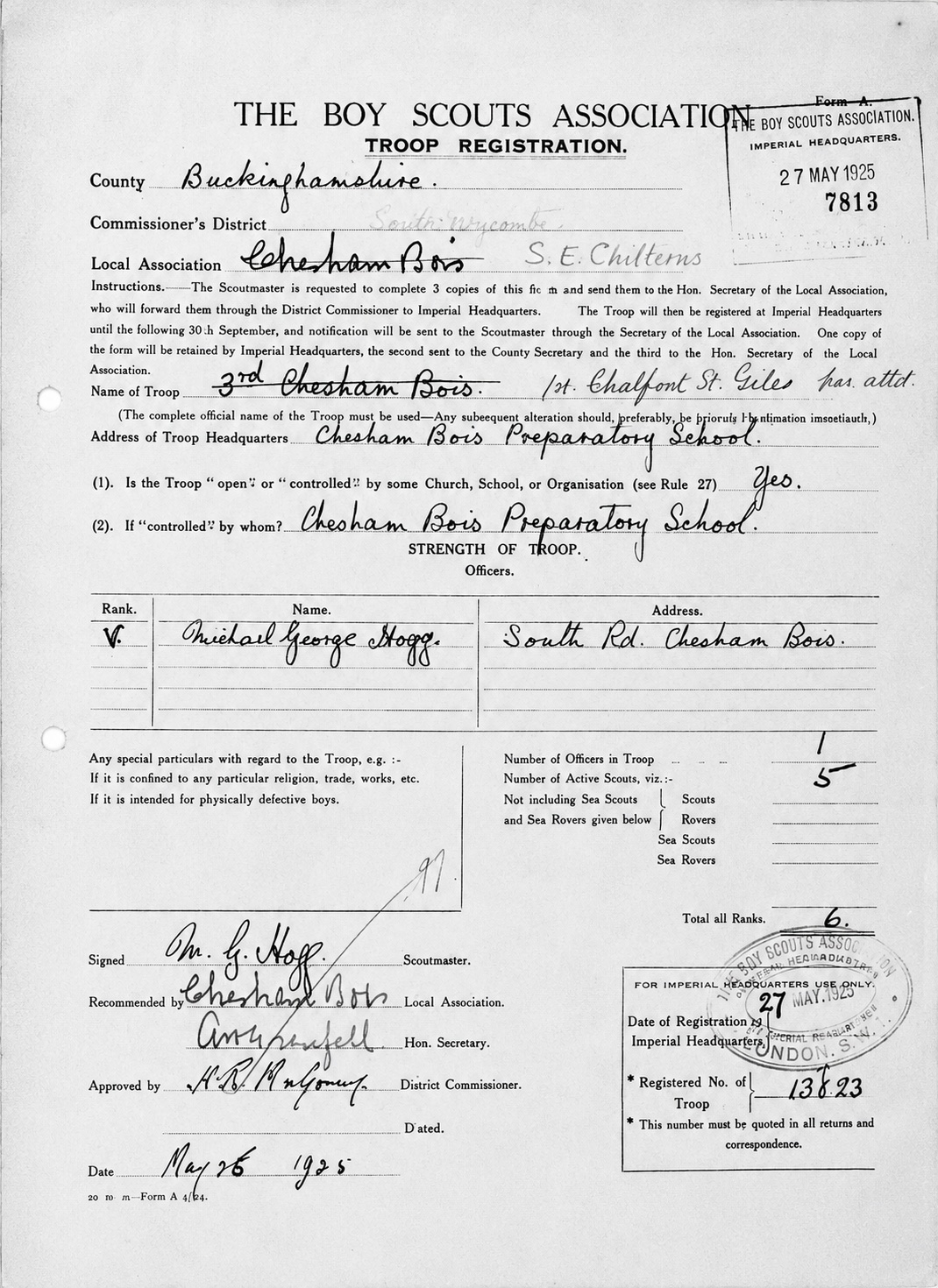
Official Scout Association registration record for 3rd Chesham Bois, officially registered with The Scout Association on 27 May 1925. This troop was re-registered as 1st Chalfont St Giles, late 3rd Chesham Bois in 1927. It represents the earliest documented Scout Group connected with Chalfont St Giles.
How today’s Group evolved
Research has shown that two separate Scout Groups operated in Chalfont St Giles during the late 1920s and early 1930s. Although they briefly shared the same name, they followed different histories.
1925–1934
Registered as 3rd Chesham Bois on 27 May 1925, based at Meadow School, Chesham Bois. It was re-registered as 1st Chalfont St Giles, late 3rd Chesham Bois in 1927, with its headquarters recorded at Shortenills Preparatory School. The South-East Chilterns Scout Association Annual Report for 1934 records that this Group had closed, while the village Group became 1st Chalfont St Giles.
1928–Today
First recorded as 2nd Chalfont St Giles in newspaper reports from 1928 and later listed in Scout Association district records. The 1934 South-East Chilterns Scout Association Annual Report records that this Group became 1st Chalfont St Giles, from which today’s Scout Group has continued.
Timeline
A Scout Troop known as 3rd Chesham Bois was registered with The Scout Association on 27 May 1925, with five Scouts and one leader.
On 13 September 1927, the troop was re-registered as 1st Chalfont St Giles, late 3rd Chesham Bois. The headquarters was recorded as Shortenills, Chalfont St Giles.
Newspaper reports record the first known activities of 2nd Chalfont St Giles, a separate village Scout Group that organised camps, community events and later established its own Scout Hut.
The South-East Chilterns Scout Association Annual Report for 1934 records that the original 1st Chalfont St Giles Group, based at Shortenills, had closed.
The same Annual Report states that “the group known as 2nd has now become 1st Chalfont St Giles.” This marks the point at which the village troop adopted the 1st Chalfont St Giles name.
Following the Second World War, Scouting resumed in March 1946, led by Laurence Lees, Kim Budd, Alan Sleator and others connected with Newland Park Teachers Training College. The old Scout Hut behind the Parish Church was in poor condition, so early meetings were held in the village school while repairs were carried out.
A surviving 1948 annual report provides one of the earliest detailed records of the re-established Group, showing an active programme of Scout and Cub activities, camping, community events and growing membership.
Rapid growth meant the old hut was no longer suitable. The idea of a new purpose-built headquarters began during the Jubilee Year celebrations.
The Building Fund was launched on 1 January 1958. Fundraising included Christmas cards, calendars, Bob-a-Job Week, fairs, whist drives, public appeals and the famous Buy a Brick scheme.
The lower section of the Silver Hill site was purchased for £500 for the benefit of 1st Chalfont St Giles Scout Group, creating the site for the new Scout Centre.
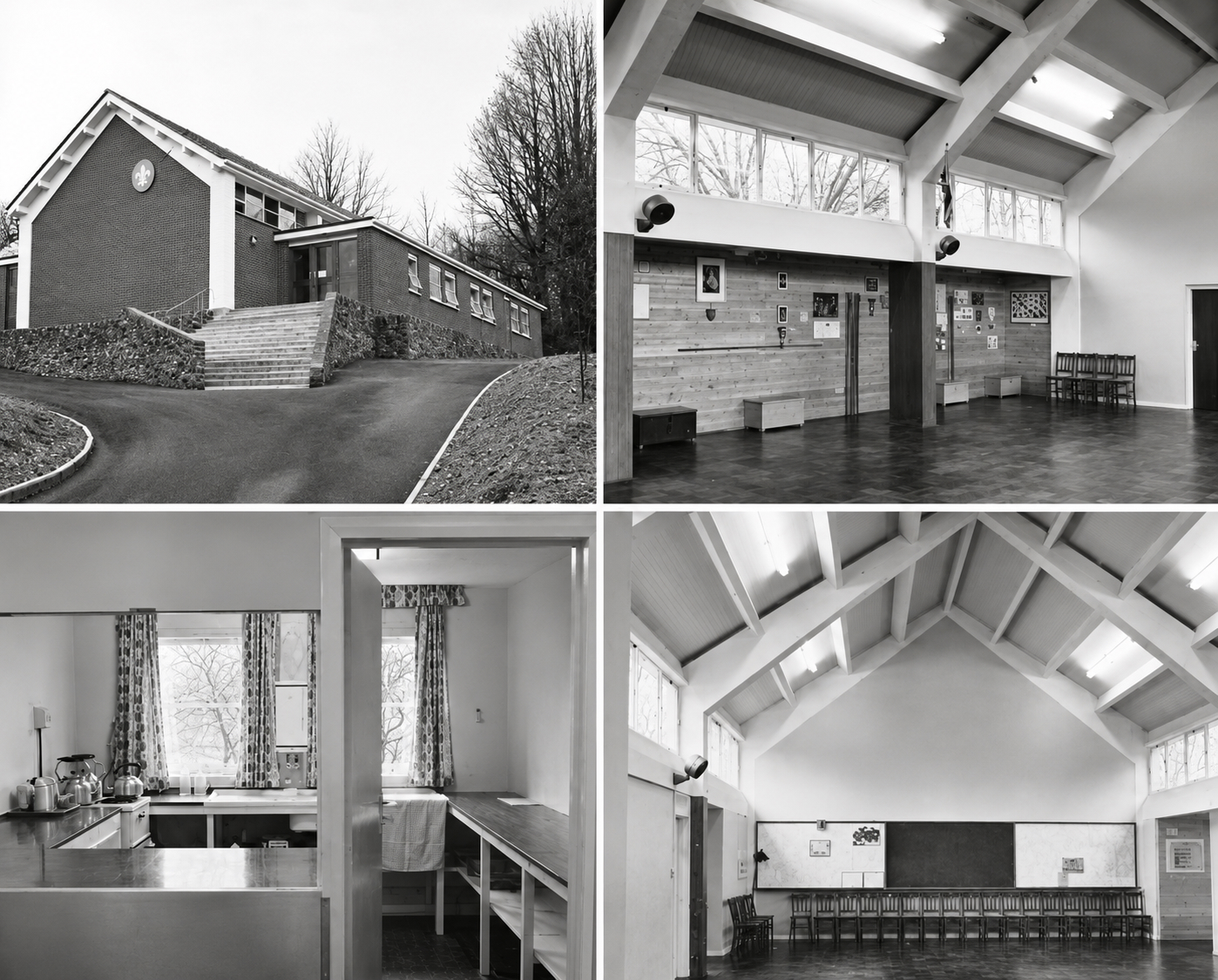
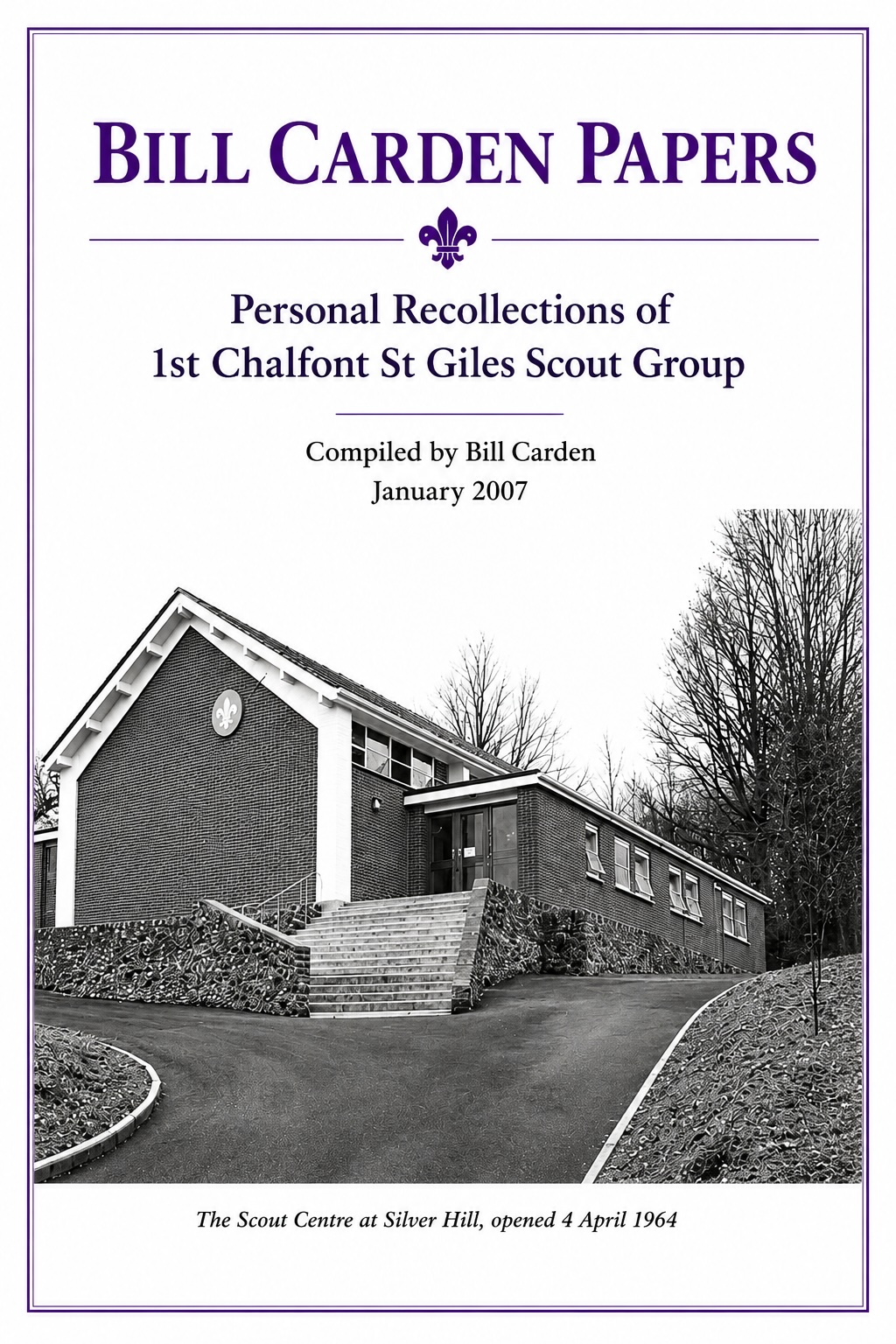
The new Scout Centre was officially opened on 4 April 1964 by Lord Curzon and dedicated by Rev. C. R. Warner, County Scout Chaplain.
Today, 1st Chalfont St Giles Scout Group continues to provide adventure, friendship and Skills for Life to young people across the village and surrounding communities.
The Silver Hill story
The Scout Centre at Silver Hill was not simply built — it was earned. For six years, families, volunteers, local businesses and supporters raised funds through fairs, Christmas card sales, Bob-a-Job Week, whist drives, public appeals and the famous Buy a Brick scheme.
The result was a purpose-built home for Scouting in the heart of Chalfont St Giles. Former Group Scout Leader Bill Carden later recorded that architect Geoffrey Pennel provided his services free of charge, while John Browne and Fred Adams played leading roles in helping turn the project into reality.
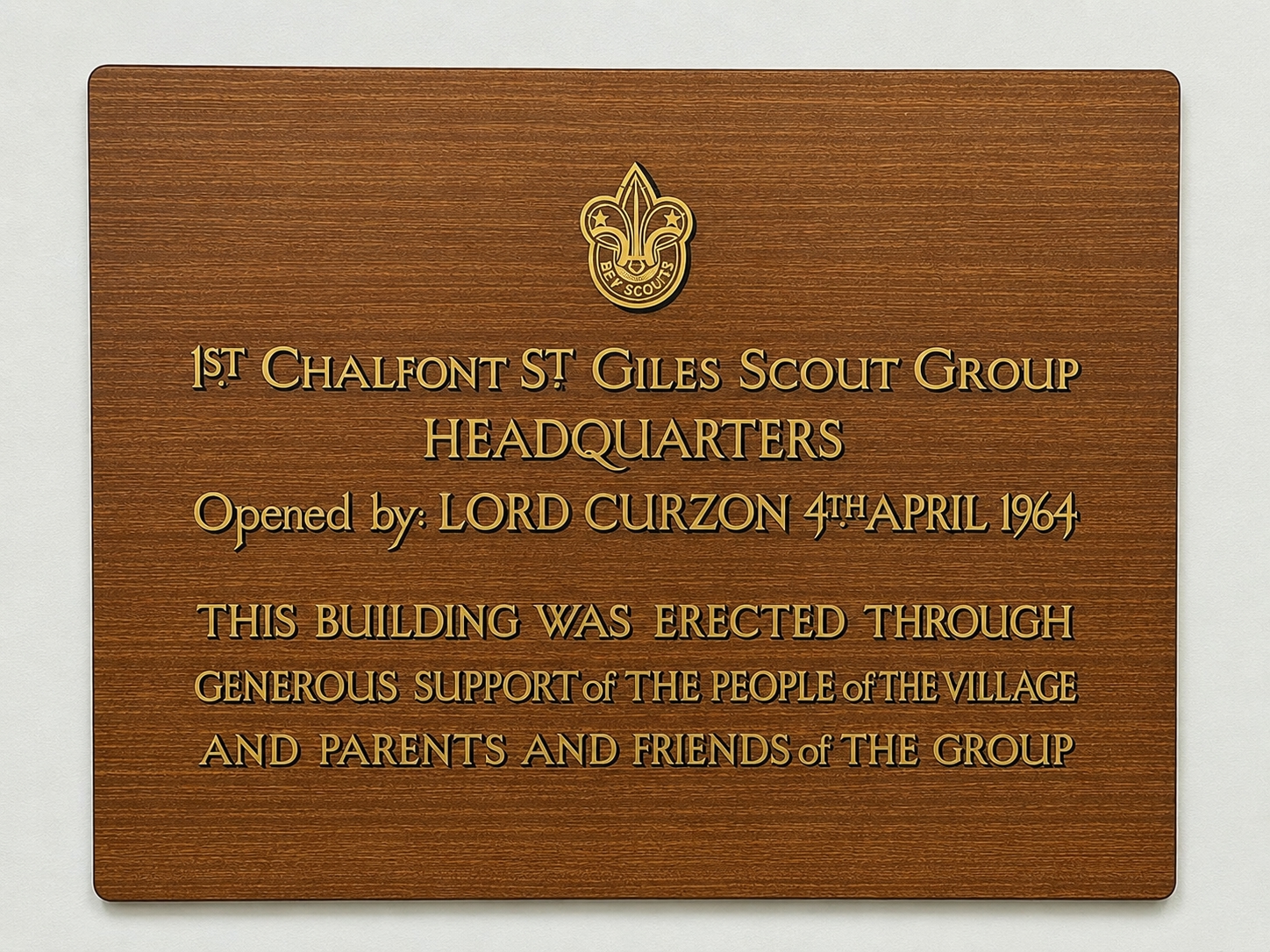
The opening plaque
The opening plaque inside the Scout Centre records that the headquarters was erected through the generous support of the people of the village and parents and friends of the Group.
It remains one of the most important physical links between today’s Group and the community effort that created our home.
Fundraising
The figures below are taken from the Scout Centre opening booklet and illustrate some of the major fundraising activities that helped finance the construction of the new headquarters. Amounts are shown in 1964 values.
The land beneath the hut
Historic deeds refer to part of a field called Old Mead, as well as a “shop and paddock at rear”.
The land was connected with Cannon Brewery Company Limited and the estate associated with The Crown public house.
The Girl Guides Association Trust Corporation purchased the Silver Hill site in 1958. The lower section of the site was subsequently purchased for £500 for the benefit of 1st Chalfont St Giles Scout Group, while the Guides retained ownership of their headquarters and the upper part of the land.
The 1960 purchase and trust arrangements required approval from the Minister of Education, reflecting the legal status of the charitable trust.
Before Silver Hill, the Group met in a wooden Scout Hut behind the Parish Church near Bowstridge Farm. Bill Carden’s recollections record that the hut was already in poor condition when the Group was re-established in 1946. Early meetings were therefore held in the village school while repairs were undertaken. The hut had no mains water, limited facilities and solid-fuel heating, but served generations of local Scouts until the move to the new Scout Centre at Silver Hill in 1964.
No photograph of the original hut has yet been found in the Group archives. If you have photographs, documents or memories connected to the old headquarters, we would love to hear from you.
The Group once had a Scout and Guide Drum & Fife Band, performing at parades, local events and national competitions.
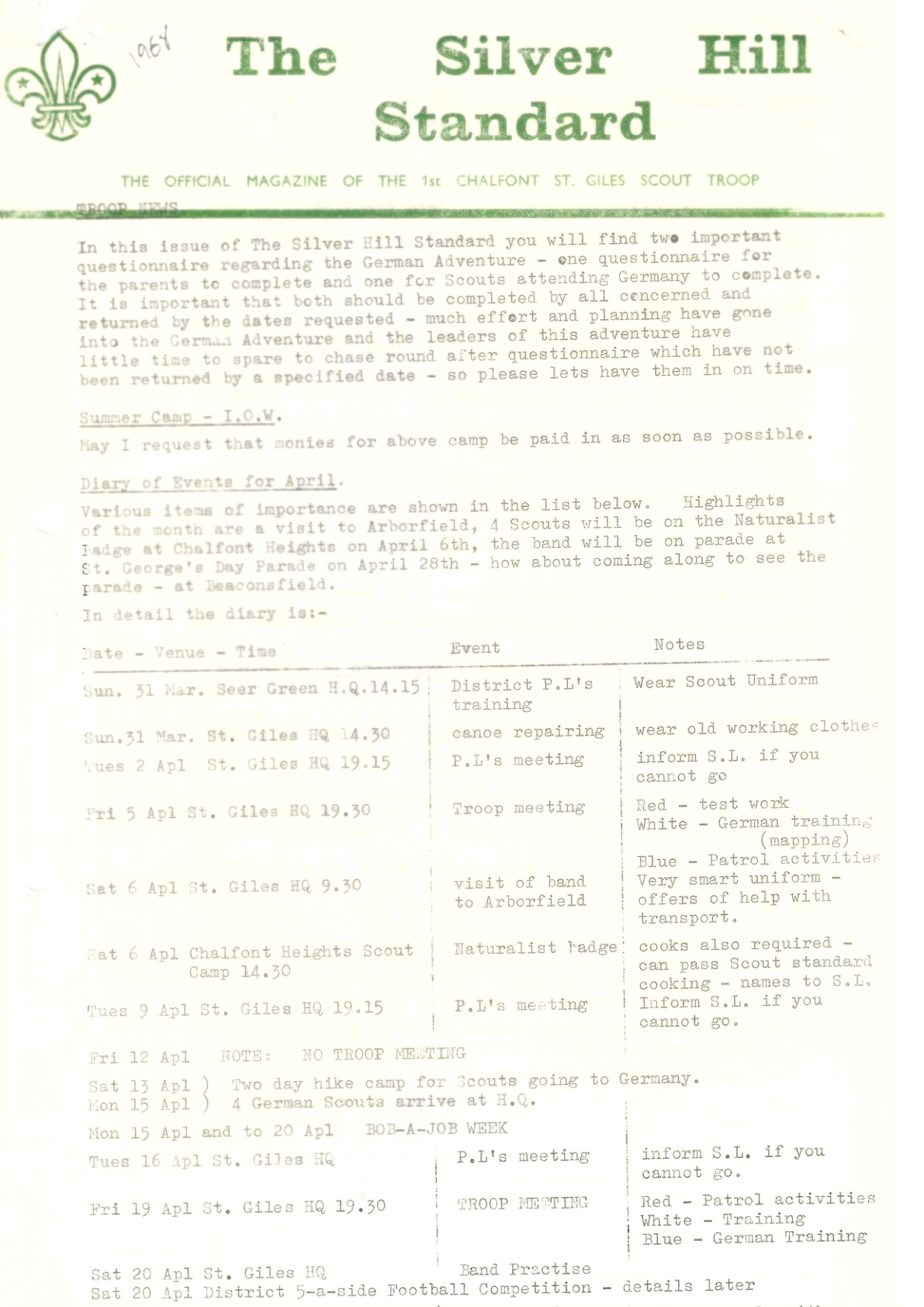
1960s newsletters record international exchanges and links with German Scouts.
The Group competed in National Scout Go-Kart Championships and achieved national success.
Historical records suggest Air Scout activities formed part of the Group’s programme during the 1970s.
Historical records indicate the Group also operated Sea Scout activities, showing the breadth of Scouting offered locally.
Camping has been at the heart of the Group’s programme for generations. Surviving records show camps at Bryher in the Isles of Scilly (1946), Dunster (1947), Crickhowell (1948), Guernsey (1959), Pembrokeshire (1960), Mid Wales (1961–62), Cornwall (1964) and Weymouth (1965), alongside Senior Scout expeditions to the Pyrenees.
Bill Carden joined the Group as a Senior Scout in 1947 and went on to serve as Assistant Scout Leader, Scout Leader and Group Scout Leader. He was awarded the Medal of Merit in 1963 and later became Assistant District Commissioner. His recollections, compiled in 2007, provide one of the most important surviving first-hand accounts of the Group’s post-war history.
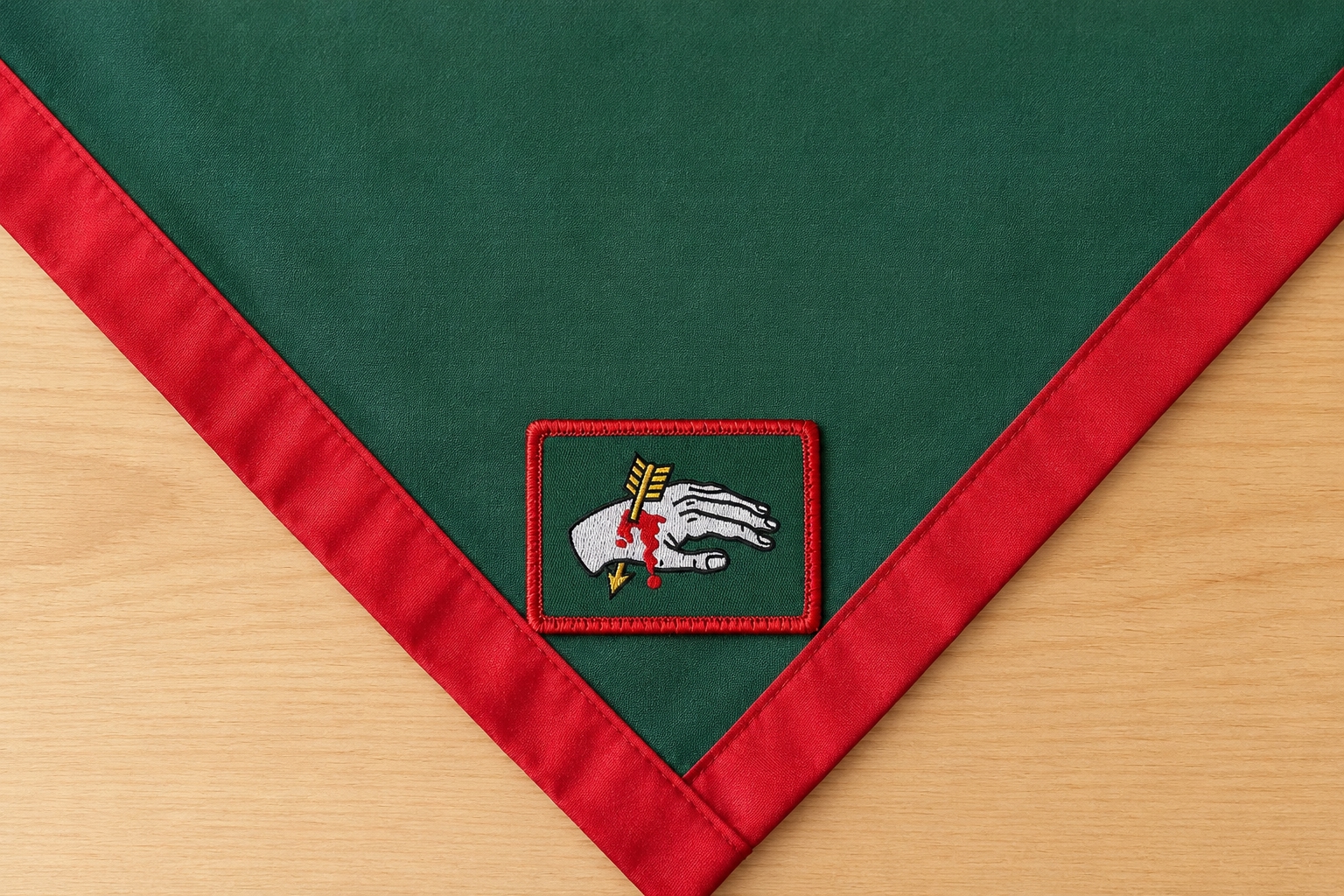
OUR IDENTITY
The St Giles Hand has long been part of the Group’s identity and appears on our scarves.
A 1966 Group newsheet explains that the emblem was inspired by imagery connected
to the Parish Church and the village’s St Giles heritage.
It links every current member with generations of Scouts who wore the same symbol before them.
Still being researched
Recent research has transformed our understanding of the Group’s early history, but there are still gaps waiting to be filled. If you have photographs, documents or memories that could help answer these questions, we’d love to hear from you.
Archive gallery
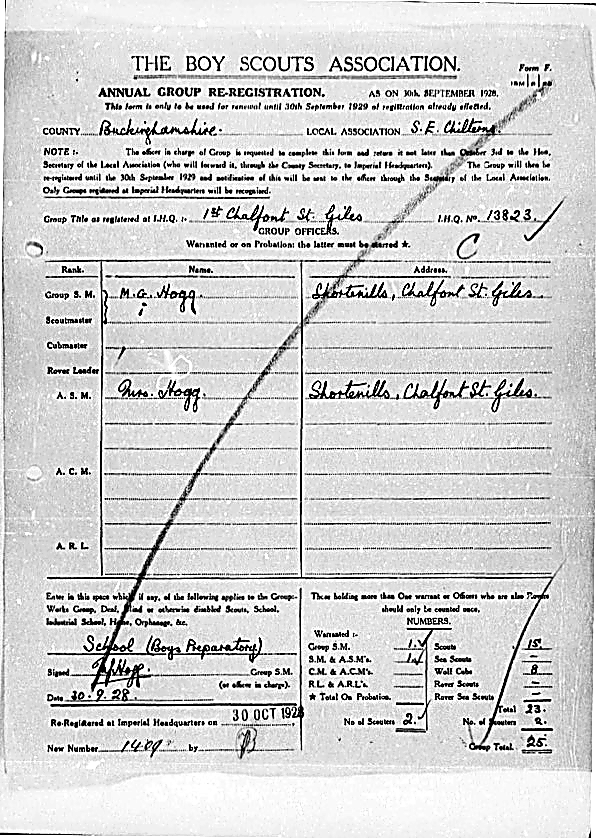
Key documents discovered during the history project, including registration records, newspaper reports, annual returns, newsletters and personal recollections from former leaders that help trace the development of Scouting in Chalfont St Giles.
Headquarters
We are continuing to research the history of 1st Chalfont St Giles Scout Group. If you have photographs, documents, memories or stories connected to the Group, we would love to hear from you.
Research note
This history has been compiled from Scout Association registration records, South-East Chilterns Scout Association annual reports, local newspaper archives, surviving Group records and other primary historical sources. Where records are incomplete, the narrative reflects the best available evidence currently known and will continue to be updated as further material is discovered.
Our Strategy to 2035
Our Strategy to 2035 will help us keep the focus on what we do best - giving young people a place to belong and giving them the skills to thrive.
Find out more